Brief Explanation of the Ruiru Case
In August, the Ministry of Lands cancelled hundreds of title deeds in Ruiru through a gazette notice after establishing that the land had been sold and transferred while under a long-standing succession dispute. The property formed part of a deceased estate, and a court process dating back several years had placed legal restrictions on any transactions.
Although buyers had conducted land searches, involved lawyers, and in some cases obtained bank financing, the titles were deemed invalid because the original transfers violated succession law. As a result, all subsequent titles derived from those transactions were revoked.
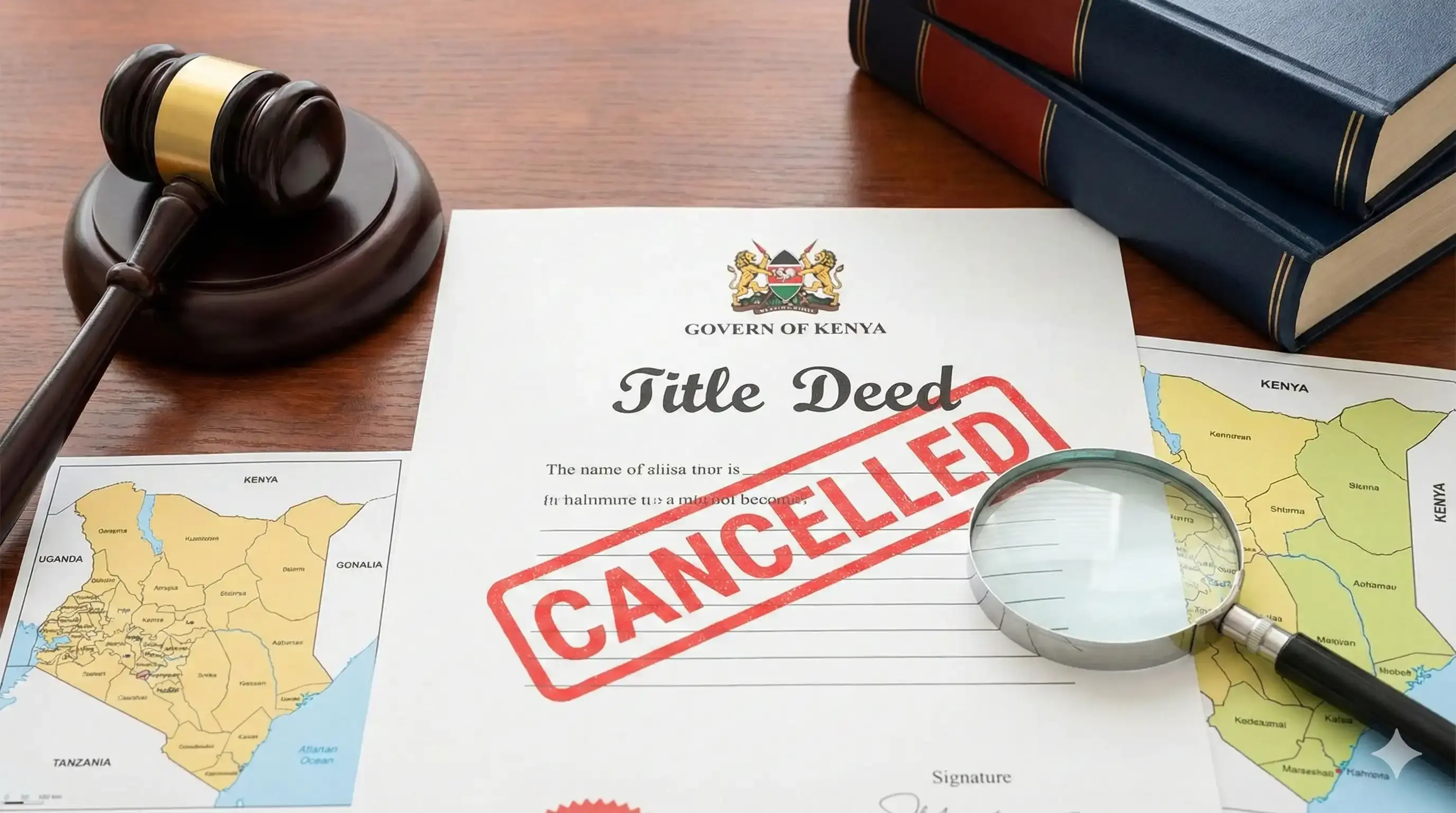
How Title Deeds Can Be Cancelled in Kenya
Under Kenyan land law, a title deed is valid only if it is issued through a lawful process. If a title is registered despite an existing court order, restriction, or unresolved ownership dispute, the government has the authority to cancel it.
This applies even where buyers acted in good faith and followed standard procedures. Titles issued in error or in violation of the law do not acquire legal protection simply by being registered.
Why Standard Due Diligence Sometimes Fails
Most property buyers rely on:
An official land search
Legal verification by an advocate
Bank or mortgage approval
While these steps are essential, they may not reveal ongoing court cases or succession disputes if registry records have not been updated. In such cases, land may appear clean in the system despite being legally restricted.
Succession Disputes and Their Impact on Buyers
Land belonging to a deceased person’s estate cannot be sold without proper court authority. This authority comes in the form of a confirmed grant or letters of administration.
Any sale conducted before this authority is issued is considered legally invalid. Even if a title deed is later processed, it can still be cancelled once the restriction is enforced.
The Legal Position of Good-Faith Buyers
Kenyan courts have consistently ruled that an illegally issued title cannot be protected, even if the buyer had no knowledge of the underlying dispute.
This means that innocent purchasers may lose land without guaranteed compensation, highlighting the importance of deeper verification before purchase.
Key Lessons for Land Buyers and Investors
The Ruiru case highlights several important lessons:
A land search alone is not sufficient
Court records should be checked, especially for inherited land
Ownership history matters as much as current registration
Rapid transfers can indicate unresolved legal issues
Buyers should treat estate land with extra caution.
The Role of Institutions and Professionals
Land transactions involve multiple institutions, including the Ministry of Lands, county governments, lawyers, valuers, and banks. When records are not synchronized or checks are superficial, buyers are exposed to risk.
Professional involvement reduces risk but does not eliminate it.
What This Means for Kenya’s Property Market
Cases of title cancellation weaken confidence in land ownership and investment. They emphasize the need for stronger coordination between land registries and courts, as well as improved transparency in property transactions.
Conclusion
The Ruiru title cancellations serve as a reminder that land ownership in Kenya is determined not only by possession of a title deed but also by compliance with succession law and court processes.
Understanding how and why titles are cancelled enables buyers to make safer, more informed property decisions.
Related posts:

Choosing between an apartment and a maisonette depends on your lifestyle, budget, and long-term plans. This guide breaks down the key differences to help you decide which home suits you best.

House hunting in Nairobi can be stressful, especially when you’re on a tight budget. Unfortunately, that pressure cost me Ksh 13,000, and I’m sharing my story so someone else doesn’t fall into the same trap.While looking for a bedsitter...
 Investing in Tilisi: Why This Fast-Growing Hub Is a Smart Real Estate Move in Kenya
  Apartment Service Charges in Kenya: What Are You Really Paying For?
  How to Safely Buy Property in Kenya: A Step-by-Step Guide
  Apartments vs Maisonettes: Which Is Better for Your Lifestyle?
  How I Was Conned While Looking for a Bedsitter in Ruaka