
Gated Community Living: Is the Premium Worth It?
Gated communities have become one of the defining features of Kenya's growing satellite towns and premium suburbs alike — offering shared security, amenities, and...
Read the storyExplore the journal
Gated communities have become one of the defining features of Kenya's growing satellite towns and premium suburbs alike — offering shared security, amenities, and...
Read the story
For many Kenyans, the biggest obstacle to owning property isn't willingness — it's raising a lump sum upfront. SACCOs (Savings and Credit Cooperative Organizations)...
Read the story
When evaluating an apartment to buy, most buyers focus on the unit itself — layout, finishes, price per square metre. Few ask about the...
Read the story
Kenya's interest rate environment has shifted meaningfully over the past year. After the double-digit Central Bank Rate levels seen through 2024 and much of...
Read the story
Diaspora remittances have quietly become one of the most powerful forces shaping Kenya's property market. In 2025, Kenyans abroad sent home a record figure...
Read the story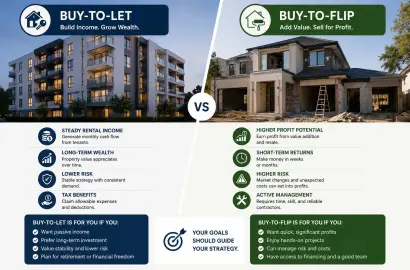
Two of the most common property investment strategies — buy-to-let and buy-to-flip — pursue fundamentally different goals, timelines, and risk profiles. Confusing the two,...
Read the story
Nairobi's real estate market has become an increasingly attractive destination for non-resident investors — diaspora Kenyans, expats, and foreign nationals alike. But buying property...
Read the story
Subdividing land — splitting one large parcel into smaller plots — is one of the most common strategies Kenyan landowners use to unlock value,...
Read the story
Nairobi's population keeps growing, and so does its appetite for fresh produce, dairy, and horticultural exports — creating steady, built-in demand for anyone farming...
Read the story
For decades, the standard advice for building wealth through Kenyan real estate was straightforward: save up, buy a plot or a rental unit, and...
Read the story
If you're standing at the crossroads of a real estate decision, chances are you've asked yourself this question: should I buy land purely as...
Read the story
Every year, thousands of Kenyans living in the United Kingdom, the United States, Canada, Australia, Germany, and across the Gulf make the decision to...
Read the story