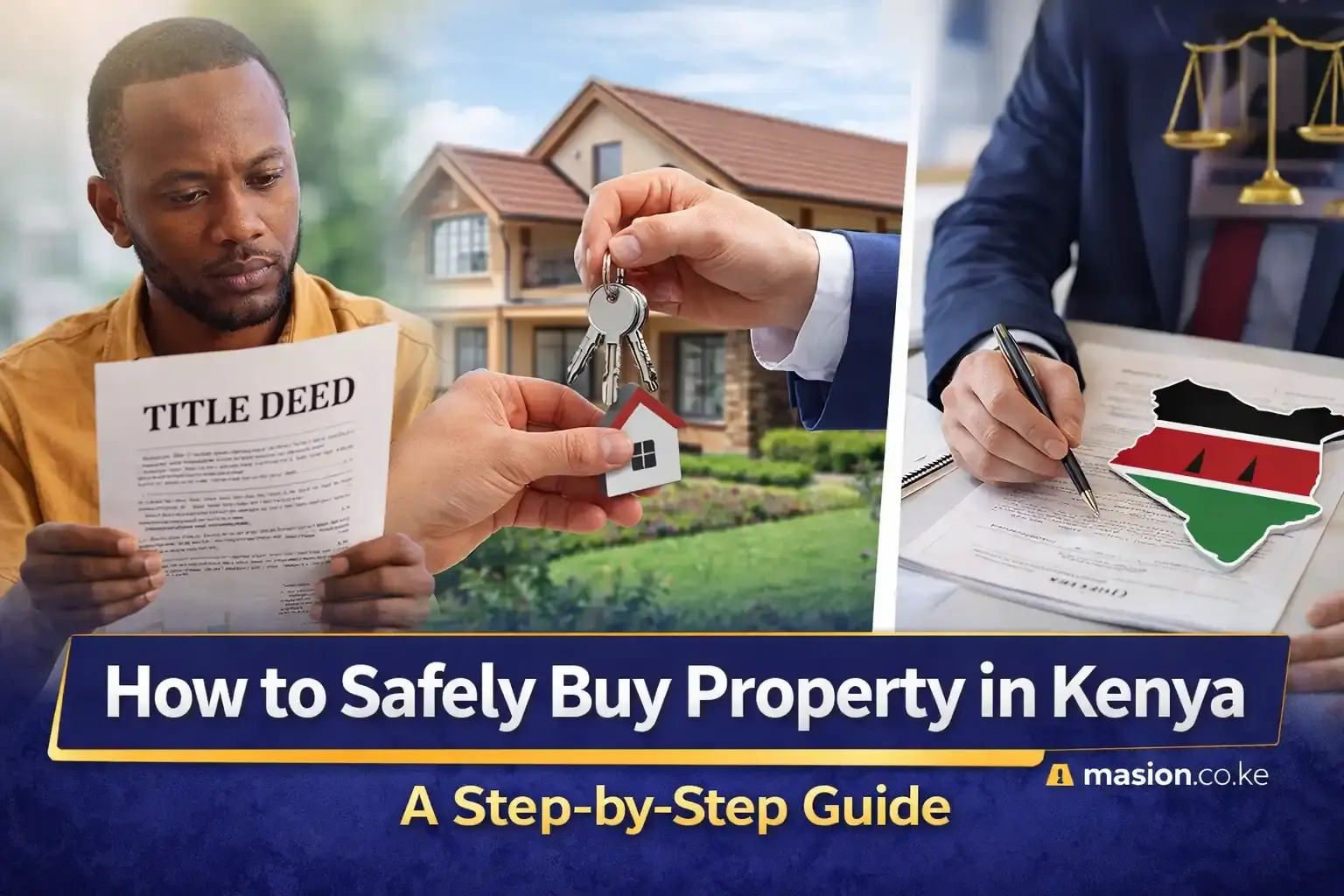
Buying property in Kenya is one of the biggest financial decisions you’ll ever make. Whether you’re purchasing land, a house, or an apartment, doing it the wrong way can lead to massive losses through fraud, fake documents, or illegal developments.
This step-by-step guide walks you through how to safely buy property in Kenya, avoid common scams, and make confident decisions—especially if you’re a first-time buyer.
Step 1: Define What You Want to Buy
Before engaging sellers or agents, be clear on:
Type of property (land, apartment, maisonette, commercial)
Location
Budget (include legal and transfer costs)
Purpose (residential, investment, resale)
👉 Clear goals reduce the risk of rushed decisions and scams.
Step 2: Land & Property Search (Do It the Right Way)
Avoid relying solely on:
Posters on electricity poles
Random WhatsApp messages
Unverified brokers
Safer Ways to Search
Use trusted platforms like masion.co.ke
View verified listings
Compare prices by location
Request physical site visits
Tip: If the price looks too good, it usually is.
Step 3: Verify Property Ownership (CRITICAL STEP)
Never pay any money before confirming ownership.
For Land:
Request a copy of the Title Deed and confirm:
Owner’s name
Land reference number (LR No.)
Location and size
Conduct an official land search at:
Ministry of Lands (ArdhiSasa or lands office)
For Houses & Apartments:
Confirm the seller owns the property
Verify approval documents from county government
Ensure the development is legally registered
Step 4: Title Deed Checks & Due Diligence
A genuine title deed should:
Match the official land search
Not be charged to a bank (unless disclosed)
Not be under dispute or court restriction
⚠️ Red Flags
Seller refuses a land search
Pressure to pay quickly
Multiple “owners” claiming rights
Step 5: Engage a Qualified Lawyer
A property lawyer protects your interests—not the seller’s.
Role of a Lawyer
Conduct legal due diligence
Draft and review the sale agreement
Hold funds in escrow (where applicable)
Ensure lawful transfer of ownership
👉 Never skip a lawyer, even if the seller seems trustworthy.
Step 6: Hire a Licensed Surveyor
A surveyor helps you:
Confirm land boundaries
Prevent encroachment issues
Verify beacon placement
Avoid buying road reserves or riparian land
This step is especially important when buying land or plots.
Step 7: Understand and Avoid Common Property Scams
Common Scams in Kenya
Fake title deeds
Selling public land
Multiple sales of the same plot
Impersonating real owners
Pressure payments before verification
Golden Rule:
❌ No verification → ❌ No payment
Step 8: Payment & Transfer Process
Never pay in cash
Use traceable methods (bank transfer)
Pay according to milestones in the sale agreement
Ensure stamp duty is paid
Transfer title officially to your name
How Masion.co.ke Helps You Buy Property Safely
At masion.co.ke, we help buyers:
Access verified property listings
Connect with genuine sellers and agents
Compare properties transparently
Reduce exposure to scams
Make informed buying decisions
Whether you’re buying land, apartments, or houses, masion.co.ke is built to make property buying safer and smarter.
Final Advice for First-Time Buyers
Take your time
Ask questions
Verify everything
Work with professionals
Use trusted platforms
Buying property in Kenya can be safe—if done the right way.
👉 Start your property search today on www.masion.co.ke
A little more clarity
Frequently asked questions
What does this article cover?
Buying property in Kenya is one of the biggest financial decisions you’ll ever make. Whether you’re purchasing land, a house, or an apartment, doing it the wrong way can lead to massive losses through fraud, fake documents, or illegal developments.
How can I find properties related to my requirements?
Browse the property listings and filter by location, price, and property type. You can also use Request a Property to share your requirements and receive matching suggestions.
How can I ask about a property?
Open the property page to review its details and contact the listing agent using the enquiry options shown there. Confirm availability and arrange a viewing with the agent.


Join the conversation
Comments
Looking for a property?Get help with a request tailored to your location and budget.
No comments yet. Share a thought or ask a question above.